Faculty and Researchers
Chemistry and Materials Science
Chemistry, Inorganic, and Nuclear
An introduction to faculty staff members and laboratories in the Chemistry, Inorganic, and Nuclear.
Note: Information on the laboratories is current as of the 2026 academic year. There may be changes to this information in the 2027 academic year.
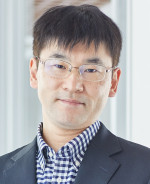
SUGIMOTO Kunihisa
- Position
- Professor
- Laboratory
- Inorganic Chemistry Laboratory
Inorganic Chemistry, X-ray Crystallography, Synchrotron Radiation Science
In inorganic chemistry, a wide variety of atoms are involved, allowing for the pursuit of infinite possibilities in material structure design. Our research focuses on synthesizing novel inorganic compounds with beneficial functionalities and elucidating their fundamental properties using cutting-edge measurement and analytical techniques.
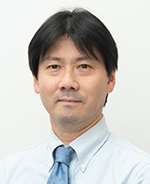
NOGAMI Masanobu
- Position
- Professor
- Laboratory
- Nuclear Chemistry Laboratory
Separation Chemistry, Radiation Chemistry
We are working to develop new separation technologies and new functional materials using radiation in order to make effective use of radioactive substances not only in atomic energy applications, but also with the aim of expanding into other areas such as healthcare.
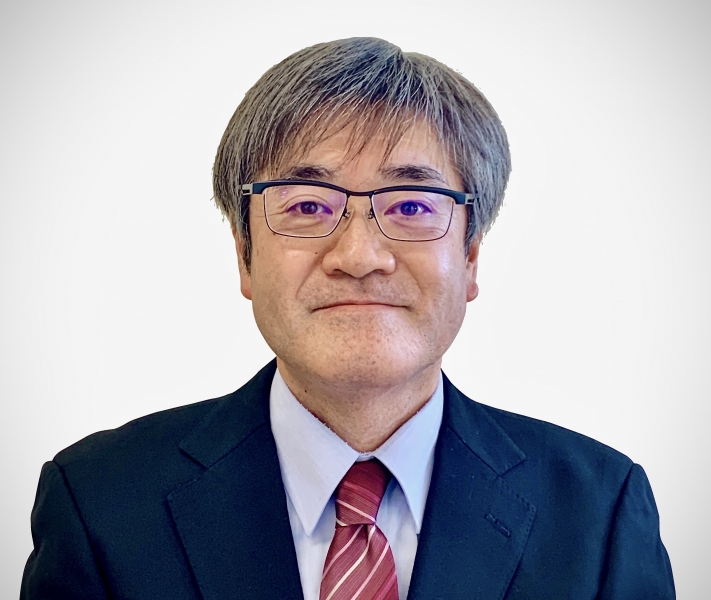
MAEKAWA Masahiko
- Position
- Professor
- Laboratory
- Organometallic chemistry laboratory
Coordination Chemistry, Organometallic Chemistry
We study about the syntheses, structures and functions of metal complexes and coordination polymers with gaseous small molecules (olefins, carbonyls, hydrides, etc.).
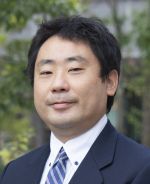
OKA Kengo
- Position
- Associate Professor
- Laboratory
- Laboratory of Advanced Ceramic Materials Chemistry
Solid state chemistry
Research interests in the Oka group are in the synthesis of novel inorganic compounds by mixing hetero anions and investigation of their physical properties such as magnetism and negative thermal expansion. Accurate crystallographic information is indispensable for the interpretation of physical properties. Thus, we often perform synchrotron X-ray diffraction study at SPring-8 and collaborate with other groups for integrating experimental and theoretical studies.